DIY Drill Train Horn Build: Convert a Cordless Drill Into a Horn
How to convert an old cordless drill or impact driver into a train horn: brushed vs brushless kits, parts, wiring steps, 15A power draw, PSI limits and hearing safety.
A DIY drill train horn build turns an old cordless drill or impact driver into a handheld horn: the motor and gearbox come out, a small 12V-class air compressor goes in, and a trumpet cluster bolts to the back of the housing. It is a genuine afternoon project, but the motor type inside your donor tool decides which kit works, so check that before you buy anything.
What a drill train horn build actually is
Nothing about a drill horn is exotic. You keep three things from the donor tool: the plastic shell, the trigger, and the battery dock. Everything that made it a drill — the motor, the gears, the chuck — gets pulled. In its place goes a compact horn compressor wired to the trigger, plus a trumpet cluster bolted to the housing and fed by a short air hose.
That makes it a tankless horn. There is no reservoir; the compressor blows straight into the trumpets for as long as you hold the trigger. That is a different animal from a truck kit. HornBlasters puts it plainly on its compressor page: a train horn needs 50+ PSI to honk correctly, no compressor produces that on demand, and so a truck kit’s compressor really exists to refill a tank. A drill horn skips the tank and lives with whatever the little pump can push in real time. For how that plays out in finished products, our explainer on how drill-battery portable train horns really work covers the pump, diaphragm, and runtime side in detail.
The project is well documented by hobbyists. One builder on the RCTalk forum, in a 02/05/2023 build thread, gutted an old cordless impact, fitted a horn-and-compressor kit they said cost about $30 on Amazon, and reported the compressor fit “with almost no effort at all” — only light rotary-tool work above the trigger and a little clearance for the compressor wires.
Brushed or brushless: the one question that decides your kit
This is the step most people skip, and it is the one that wrecks builds.
A brushed drill motor runs on plain DC through a mechanical commutator. Pull the trigger and the switch sends battery voltage to two wires. Swap the motor for a DC compressor and those same two wires run the compressor. Simple.
A brushless motor has no brushes. As Wikipedia’s brushless motor entry explains, an electronic controller replaces the brush commutator and switches DC current to the motor windings — and brushless motors are found in many modern cordless tools. That controller board was designed to drive the original motor, not a compressor, so you cannot just splice a compressor onto the motor leads.
The kit listings reflect exactly that split. BossHorn’s no-remote universal kit is described as designed for brushed drills and says to “connect the compressor directly to the drill’s terminals.” Its remote-equipped kits instead ship a pre-built harness with a remote signal receiver, and the build steps say to install the new harness — the harness replaces the original drive path, which is why those kits are listed as working with most brushless and brushed drills.
- Brushed donor tool: a simple direct-wire kit works — trigger to compressor, done.
- Brushless donor tool: buy a kit that ships its own harness and receiver. Do not wire a compressor to a brushless controller’s motor outputs.
- Not sure which you have? Open the shell before ordering. A motor with a separate control circuit board feeding it is the giveaway.
Parts and tools checklist
Here is what the documented builds and kit listings call for. Commercial DIY kits bundle most of the parts; a bargain-bin build means sourcing them yourself.
- Donor cordless drill or impact driver (working trigger and battery dock)
- Compact horn air compressor rated for 12-24V
- Trumpet cluster with mounting bracket
- Short air hose (air pipe) from compressor to trumpets
- Two bolts or screws for the trumpet mount
- Optional: wiring harness with remote receiver and a wireless remote
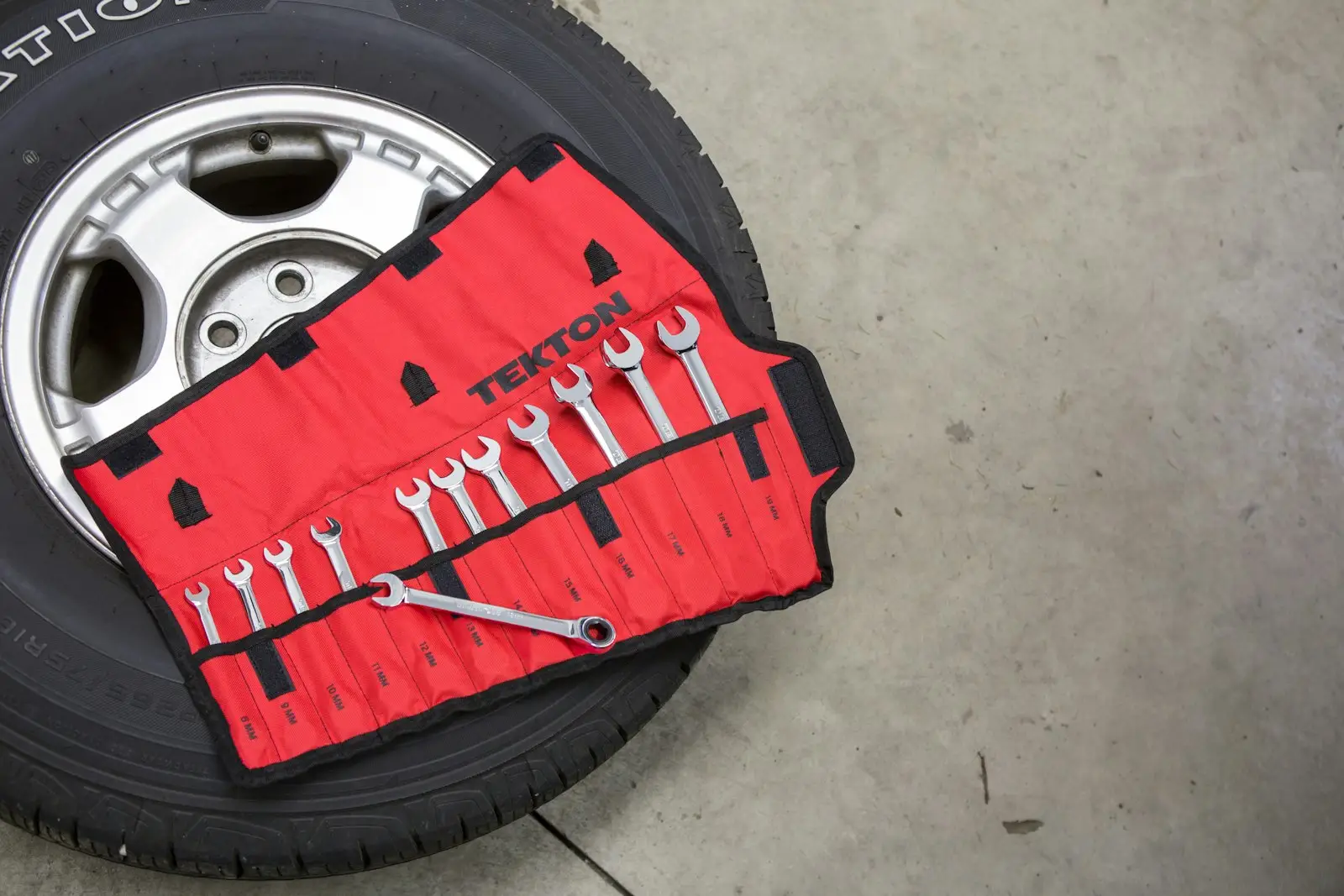
For tools, the RCTalk builder listed a rotary tool with a grinding wheel, sanding drum and rasping bit, a Phillips screwdriver, a soldering iron (optional), heat shrink, a hot glue gun, and “some patience.” SlashGear’s DIY walkthrough adds wire cutters and a second drill or electric screwdriver to pull case screws and drill the mounting holes.
Step-by-step: converting the drill
The sequence below merges the published kit instructions with the forum build. Pull the battery before you touch a wire — SlashGear’s walkthrough specifically says to make sure no power supply is connected before cutting.
- Remove the battery and open the shell. Back out the clamshell screws and lay the halves flat. Photograph the trigger wiring before disturbing anything.
- Pull the motor and gearbox. Remove the gears and motor. On a direct-wire build, clip the motor wires as close to the motor as possible so you keep maximum lead length.
- Clean and test-fit the compressor. Old tools are full of dust. Set the compressor in the empty motor bay and trim plastic with a rotary tool only where it binds — usually above the trigger and where the compressor wires exit.
- Wire it. Brushed build: connect the trigger leads to the compressor’s marked positive and negative posts; solder and heat-shrink beats tape. Brushless or remote build: install the kit’s harness per its instructions.
- Bench test. Snap in a battery and confirm the compressor runs before anything is glued.
- Secure the compressor. The forum builder used hot glue or epoxy to lock it in the housing. It should not shift when you shake the tool.
- Close the shell and mount the trumpets. Drill two holes in the rear of the housing and bolt the trumpet bracket on. The forum builder slotted the back cover to seat the horns cleanly.
- Run the air line. Cut the hose to length and connect compressor to trumpets. Short and kink-free is the goal.
- First blast with hearing protection on. See the hearing section below — this is not optional.
Power, pressure, and battery reality
Voltage. BossHorn’s replacement horn compressor lists a 12-24V input. Most 18V-class cordless packs land inside that window: DeWalt® publishes that its 20V MAX packs read 20 volts maximum with no load and 18 volts nominal. That is why drill horn kits are sold for DeWalt® 20V, Milwaukee® M18™, and Ryobi® 18V ONE+™ battery platforms. Kits listed for a specific battery platform are about the battery dock, not a louder horn.
Current. The same compressor spec lists a 15A draw. That is a lot of current through trigger contacts and thin factory leads, which is one reason kits that ship a dedicated harness are worth considering. If you are running separate wiring, our guide to train horn amp draw, fuse size, and wire gauge walks through matching wire to load.
Pressure. The compressor’s listed output is 0.1-0.13 MPa, which converts to roughly 14.5-18.9 PSI. Compare that with the 50+ PSI HornBlasters says a tank-fed train horn needs, and you can see why a drill horn sounds like a loud, brassy horn gun rather than a full truck system. It is a different tool for a different job.
Battery health. Run the pack until the horn noticeably weakens, then stop. Battery University notes that a lithium-ion protection circuit is a safeguard that can shut an over-discharged battery off and make it unusable, with trip points between 2.2 and 2.9V per cell depending on the manufacturer. Treat that cutoff as a last resort, not a fuel gauge.
Mistakes that kill a drill horn build
- Wiring a compressor straight to a brushless motor controller’s outputs instead of using a kit harness
- Cutting wires with the battery still installed
- Gluing the compressor in before bench testing it
- Long, looping air hose that kinks when the shell closes
- Undersized splices on a 15A load — tape-wrapped twists heat up fast
- Holding the trigger for long, continuous blasts with no break for the compressor
- Test-firing indoors or next to your own head without ear protection
Build it or buy it?
The math is closer than you might expect. As of 10/12/2026, BossHorn’s public product pages list the universal DIY kit with remote at $160 in black and $180 in chrome or red, the universal no-remote kit for brushed drills at $130 in black and $150 in chrome or red, and battery-specific DIY kits for DeWalt® 20V, Milwaukee® 18V and Ryobi® 18V batteries at $160 in black and $180 in chrome or red. The listings rate the kits at up to 140 dB, with an optional Extreme trumpet upgrade that SlashGear reports at 150 dB. Those are manufacturer figures with no stated measurement distance.
Build it if you already own a dead-motor or retired tool on a battery platform you use, you like the work, and you are comfortable with a soldering iron. Buy a finished unit if you want factory-built thermal and low-voltage cutoffs instead of wiring your own, or if your only spare tool is brushless and you would rather not deal with harness swaps. Our breakdown of building a custom train horn system vs buying a complete kit applies the same trade-off to vehicle setups, and the Milwaukee vs DeWalt vs Ryobi battery train horn comparison covers how much the battery platform actually matters.
Hearing protection and where you can use it
A drill horn is a handheld noise source pointed roughly where your hands are. OSHA’s occupational noise standard says exposure to impulsive or impact noise should not exceed 140 dB peak sound pressure level, and kits marketed at up to 140-150 dB sit right at or above that line by their own claims. Wear plugs or muffs for every test blast, and use a remote kit if you plan to sound it often. Our guide on whether a train horn can damage your hearing explains the exposure math.
Being handheld does not make it street-legal either. SlashGear’s walkthrough flags noise rules and quiet zones, and using any train horn on public roads is restricted in many states — check our rundown of whether train horns are legal on cars before you mount one anywhere near a vehicle. Tailgates, private property, boats and job-site signaling are where these builds belong.
Keep reading
- Portable train horns: how drill-battery models really work
- Milwaukee M18 vs DeWalt 20V vs Ryobi 18V battery train horns
- Custom train horn system vs complete kit: build or buy?
- Tankless train horns explained
- Best train horn for tailgating and game day
Sources
- RCTalk forum — Hammer’s homemade impact train horn build (02/05/2023) — hobbyist build using an old cordless impact and a roughly $30 Amazon horn-and-compressor kit, tool list, motor removal, wire clipping, rotary-tool trimming, glue/epoxy mounting, slotted rear-cover trumpet mount
- SlashGear — Everything You Need For A DIY DeWalt Train Horn — kit contents, wire cutters and second drill as tools, disconnect-power-before-cutting warning, 140 dB kit and 150 dB Extreme Trumpet Upgrade claims, remote use and quiet-zone caution
- BossHorn — DIY Train Horn Gun Kit with Remote (Universal) — brushless and brushed compatibility, pre-built harness with remote receiver, assembly steps, up to 140 dB claim, $160/$180 pricing
- BossHorn — DIY Train Horn Gun Kit with 4 Trumpets (Universal, No Remote) — designed for brushed drills, connect compressor directly to the drill’s terminals, $130/$150 pricing
- BossHorn — DIY Train Horn Kit for DeWalt 20v Battery — battery-specific kit with harness and remote, $160/$180 pricing
- BossHorn — DIY Train Horn Kit for Milwaukee 18v Battery — battery-specific kit, $160/$180 pricing
- BossHorn — DIY Train Horn Kit for Ryobi 18v Battery — battery-specific kit, $160/$180 pricing
- BossHorn — Air Compressor for Portable Train Horns — 12-24V input, 15A current, 0.1-0.13 MPa output pressure
- BossHorn — Dual Train Horn for DeWalt 20v Battery (New 2026 Model) — finished unit with factory overheat auto shut-off and low-battery auto-cutoff
- Wellbots — DIY Train Horn Gun Kit with 4 Trumpets (Universal) — retailer listing confirming the no-remote kit is for brushed drills and its build steps
- Wikipedia — Brushless DC electric motor — electronic controller replacing the brush commutator, switching DC to the windings, brushless motors in modern cordless tools
- HornBlasters — 12V Air Compressors for Air Systems & Horns — train horns need 50+ PSI to honk correctly and compressors exist to refill the tank
- DeWalt — 20V MAX 5Ah Battery (DCB205) — 20 volts maximum no-load, 18 volts nominal
- Battery University — BU-808a: How to Awaken a Sleeping Li-ion — Li-ion protection circuit shutting off over-discharged packs, 2.2-2.9V per cell cutoff range
- OSHA — 29 CFR 1910.95 Occupational Noise Exposure — impulsive or impact noise should not exceed 140 dB peak sound pressure level
Frequently asked questions
Quick answers to the questions people ask most about this topic.
- Can you turn any cordless drill into a train horn?
- Most drills and impact drivers can be converted, but the motor type matters. A brushed tool can run a compressor wired directly to its trigger leads, while a brushless tool needs a kit that ships its own harness, because the brushless motor's electronic controller is not designed to drive a compressor.
- How much does a DIY drill train horn kit cost?
- As of 10/12/2026, BossHorn lists its universal no-remote kit for brushed drills at $130 in black and its universal kit with remote at $160 in black, with chrome or red finishes $20 more. One hobbyist reported building theirs around a roughly $30 Amazon horn-and-compressor kit and an old impact driver.
- Will an 18V or 20V drill battery run a 12V horn compressor?
- BossHorn's replacement compressor for portable train horns is rated for 12-24V input and lists a 15A draw. DeWalt 20V MAX packs are 18 volts nominal, and 20 volts only with no load, so 18V-class packs fall inside that input range.
- Is a drill train horn as loud as a truck train horn kit?
- Not usually. The kit compressor lists an output of 0.1-0.13 MPa, roughly 14.5-18.9 PSI, fed straight to the trumpets with no tank, while HornBlasters says tank-fed train horns need 50+ PSI to honk correctly. Kit makers claim up to 140 dB, or 150 dB with an upgraded trumpet set, without stating a measurement distance.
- Do I need hearing protection when testing a homemade drill horn?
- Yes. OSHA's noise standard says impulsive or impact noise should not exceed 140 dB peak, and drill horn kits are marketed at up to 140-150 dB. Wear plugs or muffs for every test blast and consider a remote-triggered kit.
Related reviews & guides
Train Horn Installation Cost: DIY vs Shop Labor Breakdown (2026)
How to Install a Train Horn: Step-by-Step DIY Guide
Train Horn Dash Air Pressure Gauge: In-Cab Install Guide

Real Locomotive Horn Truck Install: Air Supply, Valve & Line Sizing

Quiet Train Horn Compressor Noise: Isolators, Mounting & Intake