Train Horn Reviews
The full aftermarket train horn landscape — real Nathan AirChime locomotive horns at the top, HornBlasters / Kleinn verified mid-premium, Wolo / Vixen mid-tier, Class 8 brass specialists, and the budget-tier brands with inflated dB claims. What each brand actually sells, what the dB numbers really mean, which to pick.
How we review
No hands-on testing. Every claim sourced. Physics applied to filter marketing-vs-engineering reality.
We aggregate publicly available data — manufacturer spec sheets, retailer listings (Amazon, Summit Racing, brand-direct), independent forum measurements, YouTube railfan recordings, and railroad-surplus market pricing. Every numeric claim is sourced. Every dB figure is annotated with measurement methodology where the brand discloses one (and flagged as suspect where they don't).
We do apply physics. When a brand claims 178 dB from a sub-$80 integrated-compressor kit, we say so — that figure exceeds a real Nathan K5LA cast aluminum locomotive horn by 29 dB (about 800× louder), which isn't physically achievable from consumer-grade hardware. Marketing-vs-engineering reality checks are part of every review. For the editorial methodology see our about page.
Every brand we cover
Sorted by tier — premium real locomotive horns at the top, budget Amazon-only with inflated claims at the bottom.
Vevor
Chinese mass retailer4-/5-/6-trumpet kits. Claims 150 dB; ~135–140 dB realistic.
Viking Horns
Amazon mid-tierV101C / V103C / V621K. Claims up to 170 dB; ~135–146 dB realistic.
FARBIN
Chinese Amazon-onlyCompact dual-trumpet integrated-compressor. Claims 150–178 dB; ~120–138 dB realistic.
Picking your horn — 4 steps
Vehicle, loudness target, duty cycle, aesthetic. Answer these in order.
What vehicle?
- Pickup / SUV: Mid-tier complete kit. Conductor's 228H, Vixen, or Wolo with separate air system.
- Pickup w/ under-hood needs: Vixen 0.5-gal kit (T1 GM secondary battery tray location).
- Class 8 semi: Grand General 69991 or United Pacific 46131. 24V variant if 24V electrical.
- Jeep / off-road: Compact integrated-compressor or Vixen 0.5-gal.
- Motorcycle: Single-trumpet (Vixen VXO8805/1101 or Outlaw 127H).
- Boat / marine: Vixen VXH1167BX2 (waterproof) or Wolo marine-grade.
How loud, realistically?
- 120–130 dB realistic: Adequate for novelty / pranking. FARBIN, low-end Vevor.
- 135–140 dB realistic: Comfortable "loud" off-road / parade. Wolo, Vixen, Vevor 4-trumpet.
- 145–148 dB verified: Maximum aftermarket. HornBlasters mid-line.
- 149+ dB at source: Real Nathan AirChime K5LA only.
138 dB → 147.7 dB is ~9 dB / about 2× louder. Price jump: roughly 4× ($150 → $650).
Sustained or occasional?
- 100% duty cycle compressor: Parade-style continuous-honk. HornBlasters (Viair OEM-grade), Viking V103C-6-12.
- 30–50% duty cycle: Fine for occasional honks. Most budget-tier kits.
- Tank size: 0.5 gal = 1–2s blast. 1.5 gal = 3–5s. 5 gal = 8–12s.
Visible or hidden?
- Visible (chrome / brass): Class 8 cab roof. Grand General, United Pacific, Kleinn HK9.
- Hidden install: HornBlasters fiberglass black, Vixen compact kits.
- Stealth: Vixen 0.5-gal under-hood, FARBIN integrated.
Reviewed products — newest first
128 reviews · most recent at the top. Click for the full write-up.
BossHorn Boss Series Train Horn for Milwaukee M18 Battery Review
Aggregated review of BossHorn's 2026 Boss Series portable train horn for Milwaukee M18 batteries: 150 dB claim, 3 volume levels, 300 ft remote, runtime, price.
Kleinn HOGKIT-1 Harley-Davidson Dual Air Horn Kit Review (2026)
Kleinn HOGKIT-1 review: a $249.95 tankless dual air horn kit rated 132 dB that hides under the Harley cowbell cover. Specs, install caveats, pros and cons.
HornBlasters King 3 544K Train Horn Kit Review (2026)
Our aggregated review of the HornBlasters King 3 544K: 3-chime die-cast horn, 5-gallon 150 PSI air system, 5-6 sec honk, from $1,879.99.
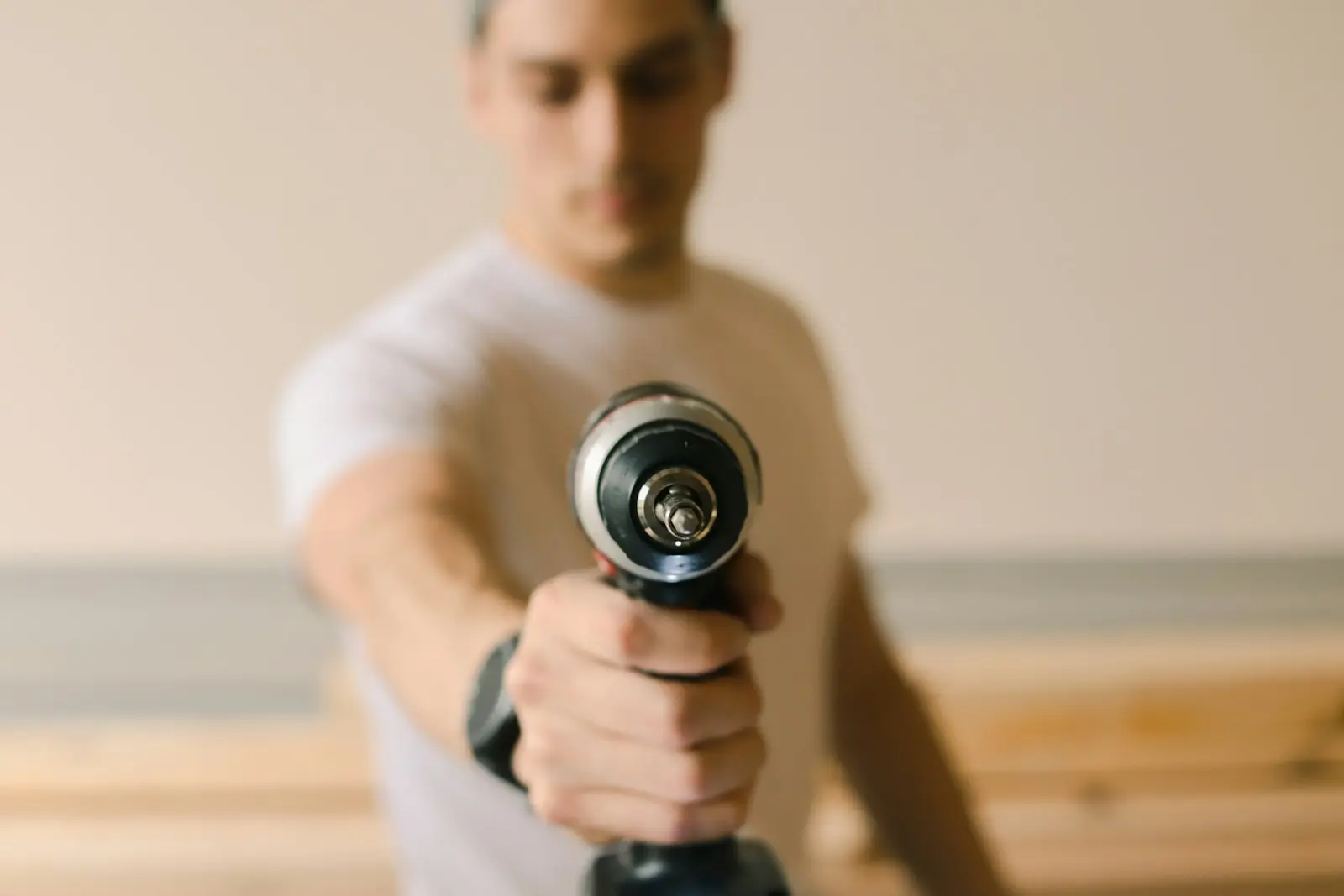
HornBlaster Drill Horn (EH-DH) Review (2026): Specs & Verdict
HornBlasters' $179.99 handheld Drill Horn: 2 metal trumpets, built-in compressor, 21V battery, 100-yard remote, ~125 dB claim. Specs, gaps, alternatives.
Nathan AirChime K3 544K Train Horn Kit Review (2026)
Nathan AirChime K3 544K kit review: reconditioned K3LA locomotive horn, 1NM compressor, 5-gal tank, 150/110 PSI, ~7 s honk, $2,749.99. Specs, pros, cons.
Wolo 820 Giant Low-Tone Roof-Mount Air Horn Review (2026)
Wolo 820 Giant review: a 28-inch chrome roof-mount air horn rated 130 dB at 90/100 PSI. Specs, the 285 vs 320 Hz conflict, air system needs, pros, cons and alternatives.
Viking Horns V003A Chrome 4-Trumpet Train Horn Review (2026)
Viking Horns V003A review: a $75 horn-only chrome 4-trumpet with a 12V solenoid and an unqualified 149 dB claim. Specs, fitment, onboard-air needs and alternatives.
Farbin 178 dB 4-Trumpet 6L Tank Kit Review: Claims vs Reality
Farbin's $139.99 4-trumpet kit with a 1.6 gal tank: the 178 vs 150 dB and 150 vs 100 PSI contradictions, real specs, owner durability reports and alternatives.
Vevor 4-Trumpet 10L 200 PSI Train Horn Kit Review (2026)
Vevor's black 2.6-gal (10 L) 4-trumpet train horn kit: 150 dB claim, 200 PSI compressor, 110/160 PSI switch, 23 A, $143.99. Specs, pros, cons, alternatives.
HornBlasters Bandit Train Horn Review (2026): Specs & Verdict
HornBlasters Bandit: compact 3-trumpet black composite air horn, $129.99 alone or $349.99-$379.99 as a 127H/228H kit. Specs, honk time, dB caveats, verdict.
Nathan AirChime K3HA Locomotive Train Horn Review (2026)
Nathan AirChime K3HA review: refurbished 3-chime K-series horn with bells #1/#2/#4A on a high manifold. $899.95 price, specs, air needs, and alternatives.

Kleinn HK1 ProBlaster Mini Dual Air Horn Kit Review (2026)
Kleinn HK1 review: a $299.95 mini dual air horn kit with 120 PSI waterproof compressor and 0.5-gal tank. Specs, dB caveats, pros, cons and alternatives.
United Pacific 46173 Mini Train Horn Bundle Review (2026)
United Pacific 46173 review: 46123 chrome 4-trumpet mini horn plus 12V compressor and 5.5 L tank. 130 dB ±10 dB claim, 110 PSI auto-off, $317–$392 pricing.

Viking Horns V103C2X-6-12/311-1B Dual-Compressor Train Horn Review
Aggregated review of Viking's black V103C2X-6-12/311-1B kit: dual 200 PSI compressors, 5-gallon tank, and a 170 dB claim Viking's own 152 dB rating undercuts.

Vixen Horns VXH3311B 3-Trumpet Train Horn Review (2026)
Vixen Horns VXH3311B review: a $47 all-metal black triple-trumpet horn with a 12V/24V solenoid. Specs, what's missing, kit options and alternatives.
HornBlasters Rhino Black 3 Liter Train Horn Kit Review (2026)
HornBlasters Rhino 3 Liter kit (HK-Q3-M3): $399.99 complete kit with 3-chime black horn, 120 PSI M3 air source, 2-3 s honk. Specs, pros, cons and caveats.
Kleinn Model 501 Warlock Steel Triple Train Horn Review (2026)
Kleinn Model 501 Warlock review: chrome-plated steel triple train horn, 151.8 dB at 150 PSI, 307 solenoid, 1/4" airline, $289.95. Specs, air needs, pros and cons.

Vixen Horns VXH3418B 3-Trumpet Train Horn Review (2026)
Vixen Horns VXH3418B review: all-metal black triple train horn, 12V solenoid, low 7.5-inch profile, $156 price, warranty, specs Vixen omits and alternatives.
How aftermarket train horns work
Same fundamental physics across every brand. Differences are in materials, air system, and engineering.
Every aftermarket train horn uses the same physics: compressed air vibrates a diaphragm, which couples acoustic energy to a bell that amplifies the sound. Bell length sets the pitch — longer bell = lower note. Multi-bell horns play a chord by combining bells of different lengths.
The differences between brands are in:
- Bell material. Cast aluminum (Nathan, real K5LA) is acoustically optimal. Fiberglass-reinforced ABS (HornBlasters) is 90%+ as efficient at 30% the cost. Chromed brass (Grand General) sounds warm but is heavy. Zinc alloy (United Pacific, Kleinn) is mid-grade.
- Diaphragm quality. Real locomotive horns use precision-machined steel diaphragms designed for decades of service. Cheap kits use thinner-gauge metal that may distort under sustained pressure.
- Air system. Tank size + compressor PSI + duty cycle. Viair compressors (HornBlasters OEM) are 200 PSI / 100% duty cycle. Generic Chinese compressors are 120-150 PSI / 30% duty cycle.
- Manifold engineering. Air distribution between bells affects how cleanly the chord plays. Premium kits use proper brass tees; budget kits sometimes have leaky plastic fittings.
For deeper physics see our how do train horns work guide and technical glossary.
What you need beyond the horn
Buying the horn is step one. Install hardware and legal context complete the picture.
Every install needs
- Trumpets + diaphragm assembly
- Air tank (0.5–5 gal) + 12V/24V compressor (120–200 PSI)
- Solenoid valve (electronically actuated)
- Wiring harness with 30A relay + dedicated fused circuit
- Activation switch (dash button or lanyard)
- 1/4″ or 3/8″ reinforced air lines
Legal in 50 states (install)
Installation is generally legal everywhere. Routine use at full output on public roads typically violates state vehicle code "unreasonably loud" provisions. Genuine safety-warning use is protected. The federal FRA train horn rule (49 CFR § 222) applies to locomotives, not private vehicles — there's no federal dB cap for aftermarket horns.
Frequently asked questions
The questions that keep coming up across reviews, reader emails, and forum threads.
What is the loudest aftermarket train horn?
The HornBlasters Shocker XL and Shocker S6 lead the verified-output tier at 147.7 dB at 3 ft. The Conductor's 228H delivers the same 147.7 dB at half the price (~$650 complete kit). Real recommissioned Nathan AirChime K5LA hits 149 dB at the source but costs $1,650+ horn-only or $5,000+ as a complete kit. Anything advertised above 150 dB (Viking 170 dB, FARBIN 178 dB, Vevor 150 dB) is marketing — physically implausible from consumer-grade hardware.
Are aftermarket train horns as loud as real locomotive horns?
Almost. Real Nathan AirChime K5LA cast aluminum horns at 125 PSI hit 149 dB at the source. The best aftermarket replicas (HornBlasters Shocker XL fiberglass-reinforced ABS) hit 147.7 dB at 3 ft — about 90%+ as loud in subjective terms. The chord voicing differs (real K5LA is a true B major 6th 5-chime; replicas are 4-note approximations) but the loudness gap is small. Where consumer kits fail is durability — real locomotive horns operate for decades; consumer ABS trumpets may degrade in 5-10 years of road salt and UV exposure.
What's the difference between a single-trumpet and multi-trumpet train horn?
Single-trumpet horns (HornBlasters Outlaw 127H at 142 dB) play one note — louder than a stock car horn but missing the multi-note chord that makes a horn sound "train-like." Multi-trumpet horns (4-trumpet Shocker XL, 6-trumpet Shocker S6) play a chord, which is what gives the sound its distinctive locomotive character. For maximum sound impact, multi-trumpet wins. For tight install spaces, single-trumpet is the fallback.
How much does a complete train horn kit cost?
Budget: $30–$80 (FARBIN, low-end Vevor) for compact integrated-compressor kits at ~120-130 dB realistic. Mid-tier: $150–$400 (Vevor 6-trumpet, Vixen VXO8805, Viking V103C, Wolo) at ~135-145 dB realistic. Premium aftermarket: $650–$2,200 (HornBlasters Conductor's 228H through Shocker XL kit) at verified 147.7 dB. Real Nathan AirChime: $1,650 horn-only, $5,000+ for complete kit. The verified-loudness sweet spot is the HornBlasters Conductor's 228H at $650.
Why are dB claims on cheap train horns inflated?
No US regulation requires aftermarket horn manufacturers to publish verified dB measurements with disclosed methodology. Brands like Viking (170 dB claim), FARBIN (178 dB claim), and Vevor (150 dB claim) advertise figures that are physically impossible for consumer-grade hardware — real Nathan K5LA cast aluminum tops out at 149 dB. Independent measurements typically come in 10-30 dB below advertised claims. Trust brands that publish testing methodology (HornBlasters discloses 3 ft measurement protocol) over those that just print a number on the box.
Are train horns legal to install on my vehicle?
Installation is generally legal in all 50 US states — no state has an outright install ban. What's regulated is use. Routine use of a 147 dB horn on public roads typically violates state vehicle code "unreasonably loud or harsh sound" provisions. Genuine safety-warning use is protected. See our /legal/ hub for state-by-state breakdown and /tools/state-legality/ for the lookup tool.
How do I pick a train horn for my truck?
Match the kit to (1) install footprint — measure your available space first, (2) air system — complete kits ship with tank + compressor; horn-only requires you to source these, (3) intended use frequency — 100% duty cycle compressor needed for parade/show use; 30% is fine for occasional, (4) verified output — pick a brand that publishes testing methodology, (5) budget. The HornBlasters Conductor's 228H ($650) hits the sweet spot for most pickup buyers. For Class 8 trucks, Grand General or United Pacific brass-trumpet kits fit the aesthetic.
Do I need to upgrade my truck's electrical system to install a train horn?
Most aftermarket kits ship with a relay and dedicated wiring harness — they don't draw power through the factory horn circuit. The compressor pulls 15-30 amps during compressor cycles; you need a dedicated fused circuit, but no charging-system upgrade. The horn solenoid itself draws 1-3 amps when actuating. For 24V Class 8 trucks, pick the 24V variant of your chosen horn (offered by HornBlasters, Vixen, FARBIN, and others) to avoid a step-down converter.
Related and sources
Where the rest of the site picks up after the buying decision.
Related pages
Primary sources
- Nathan AirChime — manufacturer site
- HornBlasters official (verified-output methodology)
- Manufacturer product pages (linked in brand hubs)
- Amazon — pricing & user-reported real-world performance
- 49 CFR § 222 — FRA train horn rule
- Editorial methodology and disclosure
We do not perform hands-on testing. dB claims are flagged where measurement methodology is not disclosed. Pricing verified April 28, 2026.