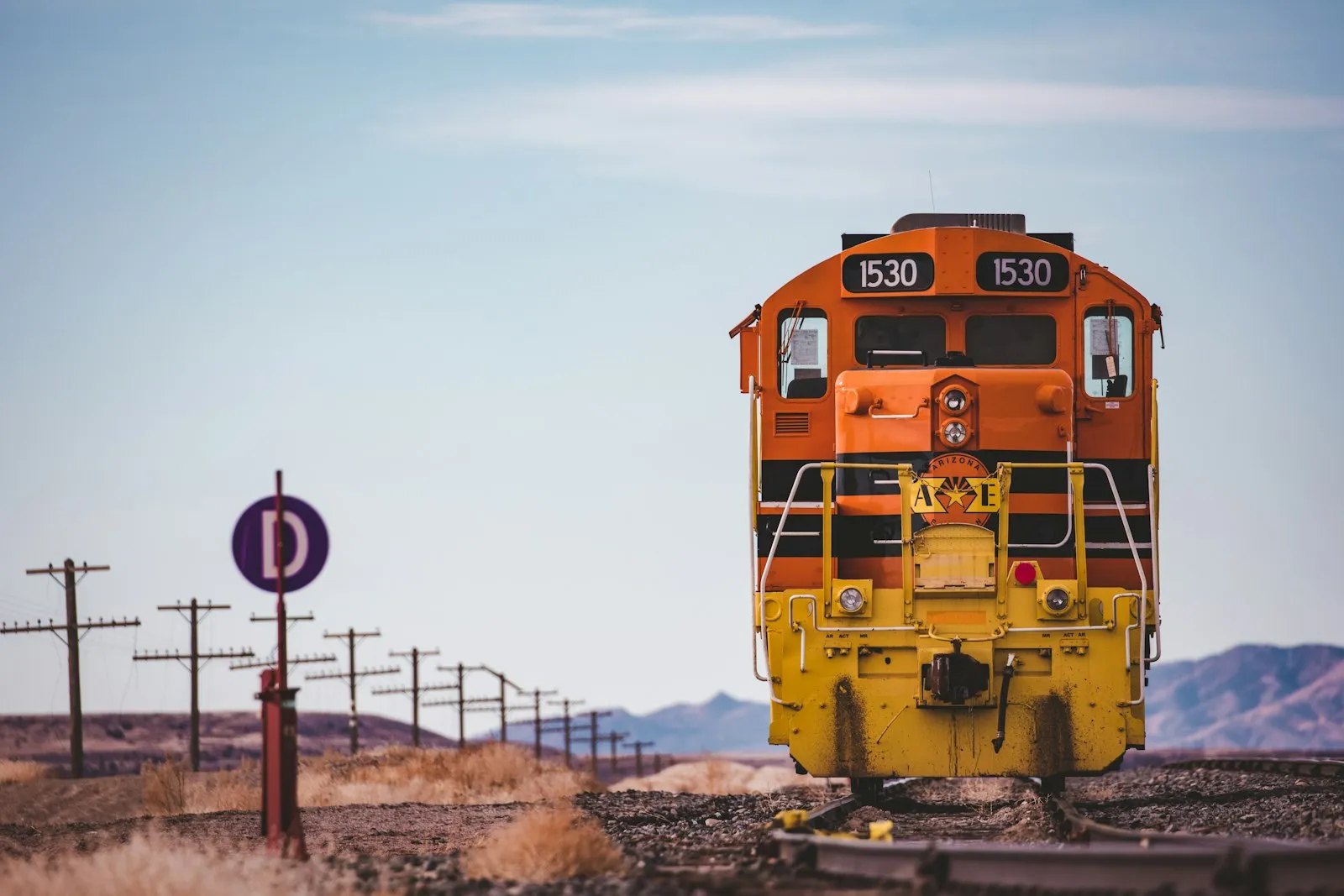
- +Genuine locomotive pedigree — the most common diesel-era 3-chime Leslie ever built
- +Authentic, instantly recognizable 'railroad' chord from the #25/#31/#44 bell set
- +Heavy die-cast aluminum construction designed for decades of mainline service
- +Supertyfon tooling is back in production under HornBlasters, so parts and rebuilds are supported
- +Loud — rated 144 dB at 100 PSI, with the deep low chime that smaller kits can't reproduce
- −Not a consumer kit — the horn ships bare, with no compressor, tank, valve or wiring
- −Demands a serious high-volume air system (large tank + high-CFM compressor) to sound right
- −Heavy (roughly 25-30 lb) and physically large, so mounting on a normal truck is a project
- −Genuine vintage S-3L units are collector items with inconsistent pricing and condition
- −Leslie never published chord frequencies, and the dB rating's test distance isn't disclosed
- −Modern production focuses on the RS-3L variant, so a true S-3L often means the used market
Methodology
This review aggregates publicly available information from manufacturer specifications, retailer listings, and verified user reviews. We do not perform hands-on testing. Last reviewed August 18, 2026. For the Leslie S-3L Supertyfon we drew on the HornBlasters Supertyfon product and history pages (HornBlasters acquired the Leslie Supertyfon tooling in late 2021), the Gotham Rail & Marine model reference for bell configuration, collector-market auction listings for vintage pricing, and general corporate background on Leslie Controls. Where a number is a manufacturer or retailer claim rather than an independent measurement, we say so. Full source list is at the bottom.
Quick verdict
The Leslie S-3L Supertyfon is not a train-horn “kit” — it is an actual diesel-locomotive air horn, and for decades it was the single most common 3-chime Leslie riding on North American locomotives. That heritage is exactly why enthusiasts want it: the #25/#31/#44 bell set produces the deep, slightly-dissonant chord that most people picture when they imagine a freight train leaning on its horn. We rate it 4.2/5. It loses points not for quality but for practicality — it arrives as a bare casting with no air system, it is heavy and large, and a genuine S-3L increasingly means shopping the used and collector market. For the right buyer, though, nothing from the consumer aftermarket sounds quite like it.
What it is
The S-3L is a three-chime member of Leslie’s Supertyfon family, the line that debuted in 1951 and quickly replaced Leslie’s earlier Chime-Tone horns. The “S” denotes Supertyfon, the “3” the number of chimes, and the “L” the bell-length series — the longest, lowest-pitched bells Leslie offered, which is what gives the S-3L its characteristic low-end growl. Three power chambers feed three flared bells fanned out along a cast manifold; air rushing past the internal diaphragms produces three notes sounded together as a chord.
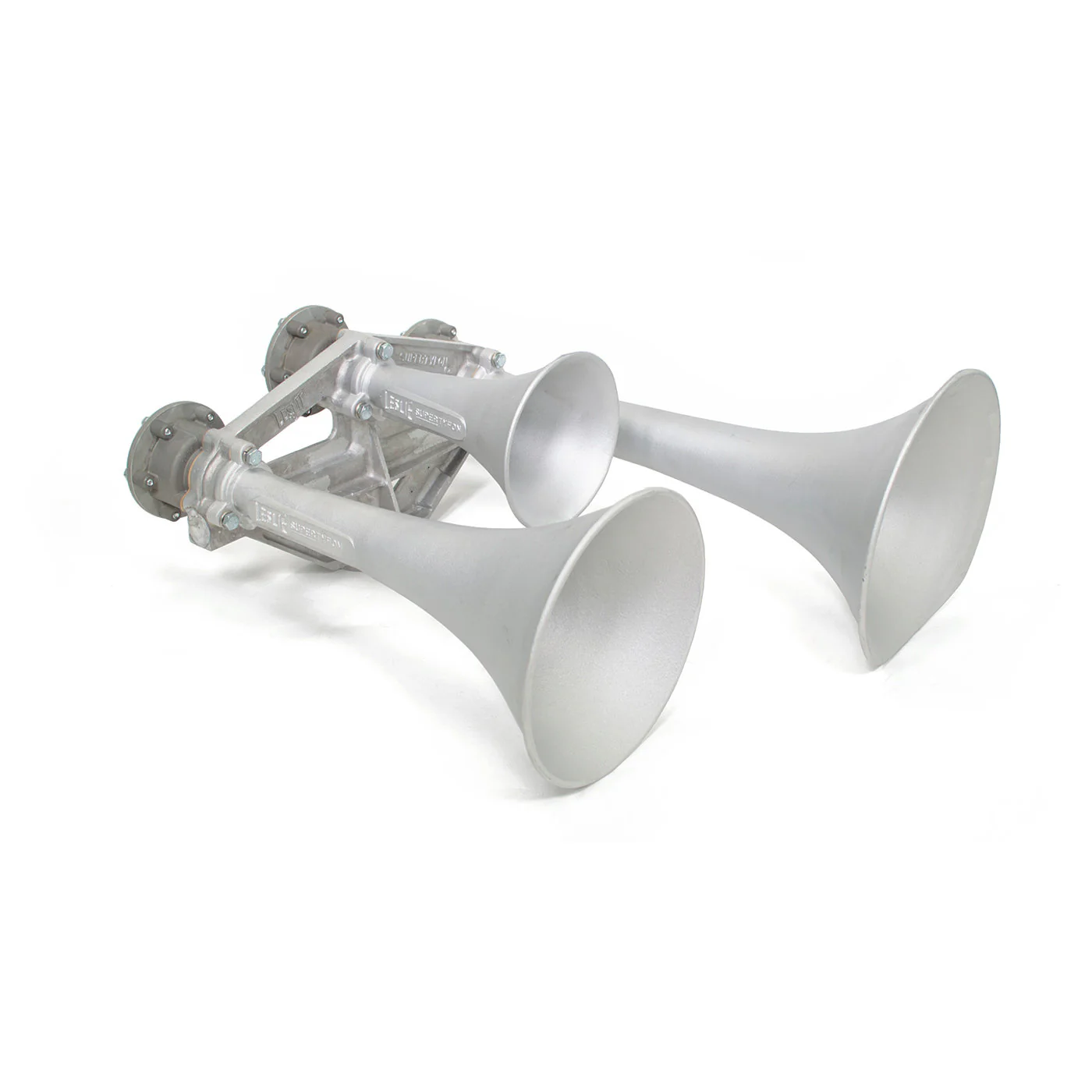
It is important to be clear about what the S-3L is for. This is a locomotive horn first and a vehicle horn second. It was engineered to be fed by a locomotive’s onboard air supply at sustained pressure, and to be heard at grade crossings miles away. People absolutely do mount Supertyfons on trucks and rat rods, but doing it well is a fabrication-and-air-system project, not an afternoon install. If you want plug-and-play, a packaged kit like the HornBlasters Conductor’s Special 228H is a far easier path; the S-3L is for buyers chasing authenticity.
Specifications
Leslie published relatively little consumer-style spec data over the horn’s life, so the figures below combine the original locomotive design with the current-production Supertyfon dimensions documented by HornBlasters, which now owns the tooling. Treat the dB and range figures as manufacturer/retailer claims.
| Spec | Value |
|---|---|
| Type | 3-chime locomotive air horn (Supertyfon series) |
| Chime / bell set | Bells #25, #31, #44 (the “L” long-bell series) |
| Sound output | 144 dB at 100 PSI (test distance not disclosed) |
| Operating pressure | ~90–140 PSI; rating quoted at 100 PSI |
| Effective range | Claimed up to ~3.5 miles |
| Air inlet | 1/2” NPT |
| Material | Die-cast aluminum body and bells |
| Dimensions (current production) | ~26.5 in L × 17.5 in W × 9.25 in H |
| Weight | ~25–30 lb depending on casting |
| Power source | Vehicle/locomotive compressed-air system |
| Manufacturer | Leslie Controls; Supertyfon line now produced by HornBlasters |
| Warranty (current production) | 1-year manufacturer’s defect warranty |
One honesty note: Leslie famously tuned its chords slightly off-key on purpose, on the theory that a mildly dissonant chord cuts through ambient noise better than a clean major triad. The exact frequencies of the #25/#31/#44 bells were never published as a consumer spec, so we won’t invent Hz values — the bell numbers are the reliable, verifiable identifier of the S-3L chord.
What it includes
This is the part that surprises first-time buyers. A Leslie S-3L — vintage or new-production — is sold as the horn alone.
- The cast aluminum 3-chime horn with bells #25, #31 and #44
- A 1/2” NPT air inlet for connection to your own air system
- No air compressor
- No air tank
- No solenoid valve, air lines or fittings
- No wiring, switch or relay
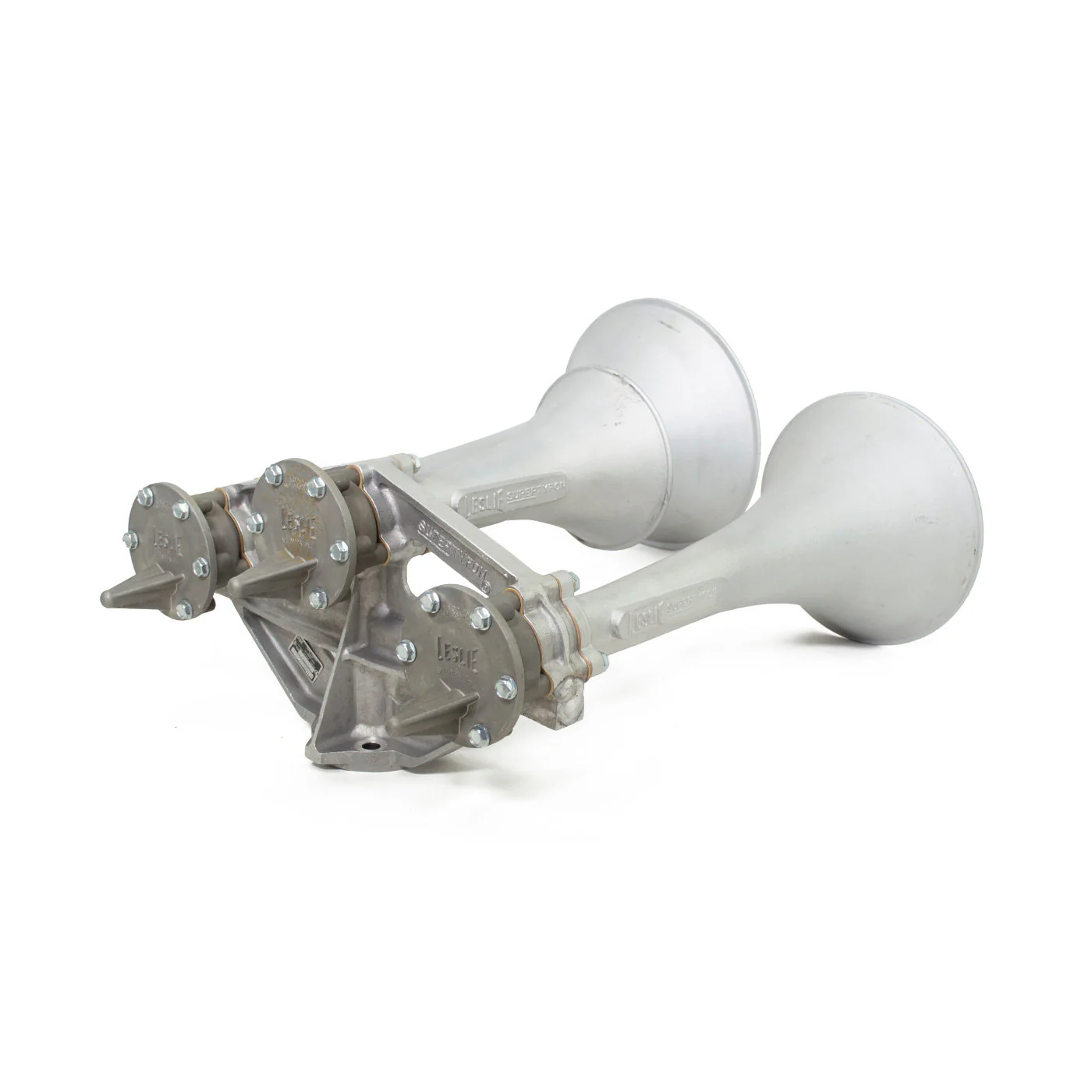
Everything needed to actually make noise is a separate purchase. Budget for a high-output compressor, a tank large enough to sustain pressure through a long blast, a heavy-duty solenoid valve sized for the horn’s appetite, and the relay/wiring to trigger it safely. If you’ve never wired a horn before, our train horn relay wiring guide and installation walkthrough cover the basics.
Pros
- The real locomotive sound. The S-3L was the workhorse 3-chime Leslie of the diesel era — its chord is the authentic article, not an approximation.
- Serious build. Die-cast aluminum bells and manifold built for years of mainline duty, not a stamped trumpet set.
- Still supported. With HornBlasters now manufacturing the Supertyfon line, the tooling, rebuilds and replacement parts didn’t disappear with the original maker.
- Genuinely loud, low and far-reaching. A 144 dB claim at only 100 PSI, with deep low-bell content small kits can’t match.
- Collectible. Genuine vintage units hold value and carry railroad history many enthusiasts care about.
Cons
- Bare horn only. No compressor, tank, valve or wiring in the box — the air system is entirely on you.
- Air-hungry. To sound right it wants a large tank and a high-CFM compressor; an undersized system makes it sputter.
- Big and heavy. Roughly 25–30 lb and over two feet long; mounting on a typical pickup is a fabrication job.
- Sourcing. True vintage S-3L units come from the used/collector market with variable condition and pricing.
- Thin published data. No official chord frequencies, and the dB figure’s measurement distance isn’t stated.
Alternatives
- Leslie RS-3L Supertyfon — the closest sibling and what’s actually in current production. Same #25/#31/#44 bell chord, but on the more compact “R” clustered manifold that’s friendlier to mount. If you love the S-3L sound but want a new unit, start here.
- Nathan AirChime K5LA — the five-chime icon of the modern locomotive horn world. Bigger, more complex chord and even more presence; also bare-horn-only and even hungrier for air.
- Nathan AirChime K3LA — the three-chime Nathan, the natural cross-shop against the S-3L for buyers comparing the two great American locomotive-horn makers.
For pure loudness rankings across both real locomotive horns and consumer kits, see our loudest train horns guide.
Install / compatibility notes
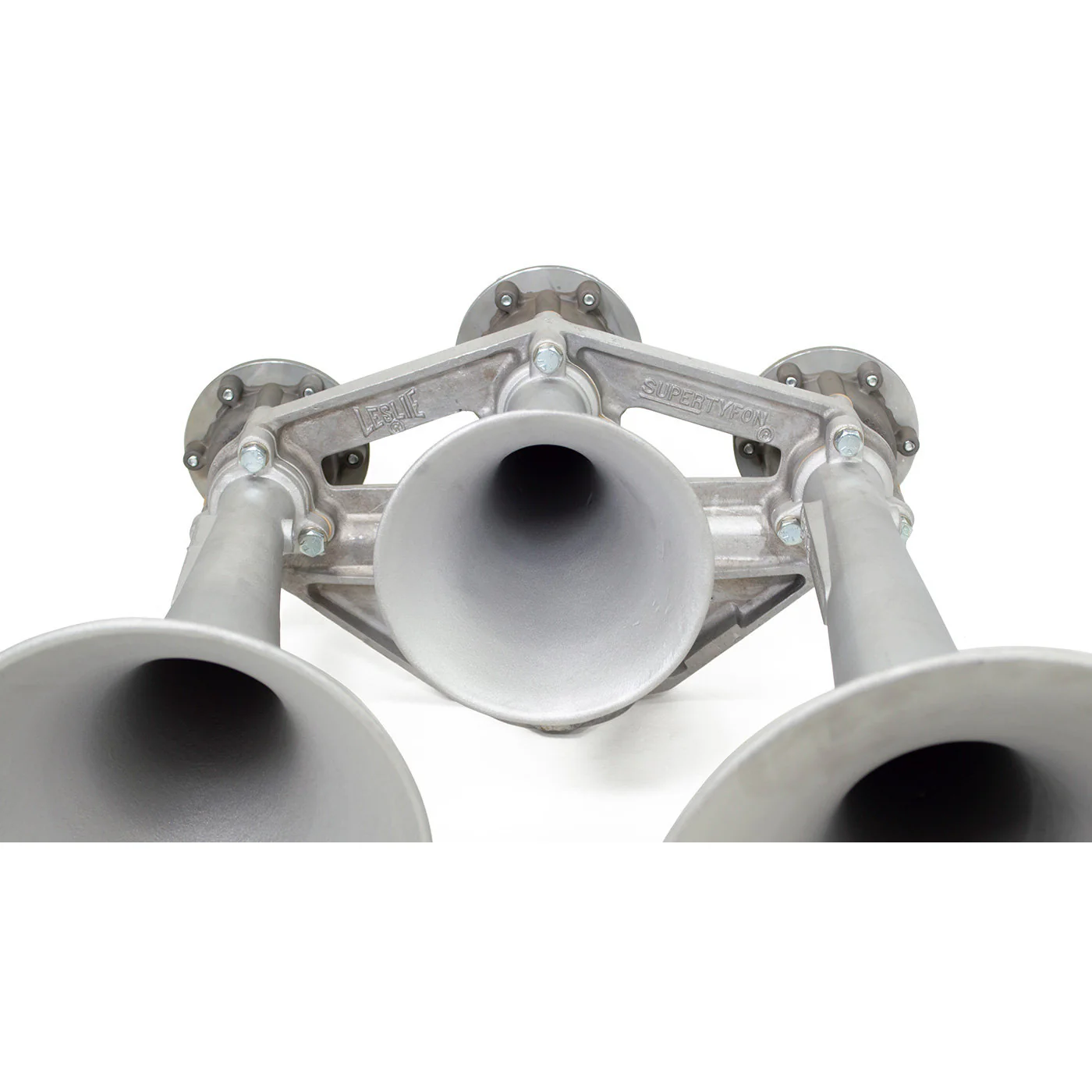
The S-3L connects through a 1/2” NPT inlet, which is a clue to its appetite: this is a large-port horn that expects real airflow. A workable vehicle setup generally means:
- Air supply. A high-output 12V or 24V compressor feeding a tank in the multi-gallon range, so pressure doesn’t collapse mid-blast.
- Pressure. Plan for an operating window around 90–140 PSI; more pressure means more volume but check your tank and fittings are rated for it.
- Valve. A heavy-duty solenoid valve with a large orifice — an undersized valve chokes the horn and kills the low chime.
- Mounting. Solid, vibration-resistant brackets bolted to structure, not sheet metal, given the weight and the forces a horn this size generates.
- Drainage. Mount with the bells angled slightly down so water doesn’t pool in the chambers; see our notes on where to mount a train horn.
Electrically it’s no different from any air horn: the solenoid is switched through a relay so the cab button only carries trigger current. If you’re sizing tubing, our air line size guide explains why a horn like this wants larger line than a compact trumpet set. And because it’s a big air consumer, expect your compressor to cycle — review compressor duty cycle before you buy the air side.
On legality: a horn this loud is for off-road, show, or controlled use in many places, and some jurisdictions restrict aftermarket horns on public roads. Check your state’s rules before installing.
Sources
- HornBlasters — Leslie RS-3L Supertyfon train horn — current-production dimensions, weight, 1/2” NPT inlet, 144 dB at 100 PSI claim, ~3.5-mile range, price and 1-year warranty for the Supertyfon 3-chime
- HornBlasters — Leslie SuperTyfon history & legacy — Supertyfon line history (1951 debut), HornBlasters’ 2021 acquisition of the tooling, and Leslie’s deliberately off-key chord design
- Gotham Rail & Marine — Leslie SuperTyfon S-3L-R — confirms the S-3L uses bells #25, #31 and #44 and the diamond-manifold platform
- Wikipedia — Leslie Controls — corporate background on the Leslie Controls company
The S-3L Supertyfon is the real thing — a legitimate diesel-locomotive 3-chime horn for railfans, restorers and serious enthusiasts who want authentic railroad sound and will build a proper air system around it, not a plug-and-play kit for the average truck.
Frequently asked questions
Quick answers to the questions people ask most about this topic.
- How loud is the Leslie S-3L Supertyfon?
- Retailer specs for the current-production Supertyfon 3-chime list 144 dB at 100 PSI, with claims of being audible up to roughly 3.5 miles. The test distance behind that dB figure isn't disclosed, so treat it as a manufacturer/retailer claim rather than an independent measurement.
- What's the difference between the S-3L and the RS-3L?
- Both use the same three bells — #25, #31 and #44 — so the chord is essentially the same. The difference is the manifold layout: the classic S-3L spreads its bells along a cast manifold, while the RS-3L uses the more compact 'R' clustered arrangement that's easier to mount. New units today are generally the RS-3L; a true S-3L often comes from the used market.
- Does the S-3L come with an air compressor and tank?
- No. Like all locomotive-style horns, the S-3L is sold as the bare horn with a 1/2" NPT inlet. You supply the compressor, tank, solenoid valve, air lines and wiring separately, and it needs a high-volume air system to sound its best.
- Can I put a Leslie S-3L on my truck?
- Yes, but it's a project. At roughly 25–30 lb and over two feet long, with a big appetite for air, it needs sturdy mounting and a serious compressor-and-tank setup. Many local laws also restrict horns this loud on public roads, so confirm legality and plan the install before buying.
- How much does a Leslie S-3L cost?
- Genuine vintage S-3L units trade on the used and collector market, where condition drives price and figures vary widely. The closest current-production Supertyfon 3-chime, the RS-3L, sells new as a stand-alone horn for $2,849.99 at HornBlasters as of August 2026. Compare condition carefully before buying.